A visible drip can lead to a defined repair. Moisture in a wall or unexplained water use may need a separate investigation before the repair can be priced.
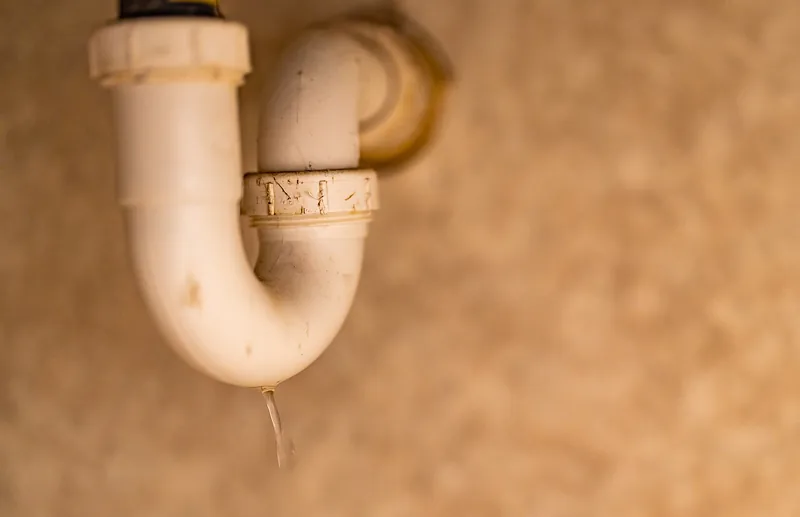

Visible pipe leak or concealed source?
Water under a sink may come from a supply connection, faucet, or drain assembly. Water near a wall or ceiling can have a source that is not visible at the stain. The location of moisture is useful information, but it does not establish which part has failed.
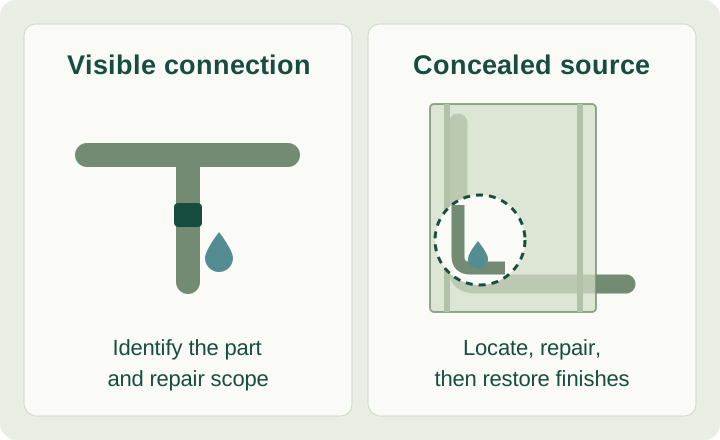
For an exposed problem, an estimate can identify the connection or section to be repaired. For a concealed problem, expect a conversation about locating the source, possible access openings, and approval before the work expands. Avoid treating a whole-house repipe as the default answer to one unexplained leak.
What does a leak-repair estimate include?
Use three separate lines when comparing proposals: investigation, plumbing repair, and restoration. This makes it easier to see why two totals differ.
- Investigation: the visit, testing, and any locating work, with its limits.
- Repair: the affected part, material, labor, and checks after completion.
- Restoration: opening and closing walls, cabinets, flooring, or other finishes, plus any drying work handled by another business.
Ask who stops for your approval if the source or access is different from what was expected. A plumbing repair price should not be assumed to include finish repairs.
Unusually high water use with no visible drip
Portland Water Bureau explains how meter observations can help identify unexpected water use when fixtures and water-using equipment are off. Movement can point to water passing through the meter; it does not locate a leak or prove which pipe is involved.
Start with the Water Bureau’s leak-finding guide. Note any running toilets, irrigation use, or recent changes before describing the problem. Keep meter and utility account information for your utility or attending provider rather than entering it in this site’s form.
What changes the repair price?
Access often matters as much as the visible drip. An exposed connection, a pipe inside a finished wall, and a buried service line involve different labor and restoration. Material, the length being replaced, and any required testing also change the scope.
We have not verified a comparable local published leak-repair range, so we do not attach a generic number to these different jobs. Ask for the diagnostic charge first, then a written repair scope. Use the printable estimate worksheet to keep separate charges visible.
After repair: keep records for the water supplier
Portland Water Bureau customers can request a leak-related bill adjustment after qualifying repairs. The bureau determines eligibility. Keep a short record of when you found the leak, when it was repaired, what was repaired, and any invoice or supporting records.
Read the current adjustment requirements and application before relying on an adjustment. If another utility supplies the property, use that utility’s process. A Portland mailing address alone does not establish the water supplier.
Common questions
Can a high water bill mean a hidden leak?
It can be one explanation. Compare use, household changes, fixtures, and the water supplier’s guidance. A bill alone does not identify a failed pipe or establish that a repair is needed.
Does leak detection include the repair?
Not automatically. Ask whether the charge covers investigation only, what findings you receive, and whether any part of that charge is applied to an approved repair.
Is water around a toilet or faucet a pipe-repair request?
Describe the exact location. A toilet repair or faucet repair may be a better starting scope. If the source is unclear, select a leak request.
Sources & editorial notes
Prepared by Portland Plumbing, an independent website publisher. General homeowner information; no on-site diagnosis or professional review is claimed. Sources checked October 17, 2026.
Provider sources explain their own services or published price examples. Listing a source does not establish a referral partnership.
Request an estimate
Tell us what needs attention and where service is needed.